A fall, twist, or collision can cause pain, swelling, and bruising that make it difficult to tell what type of injury has occurred. When comparing sprain vs. fracture symptoms, appearance and pain alone are not always enough because both injuries can cause similar symptoms, and some fractures are not immediately obvious. Hillsboro Urgent Care can evaluate many non-emergency injuries and help determine whether imaging, additional treatment, or referral may be appropriate.
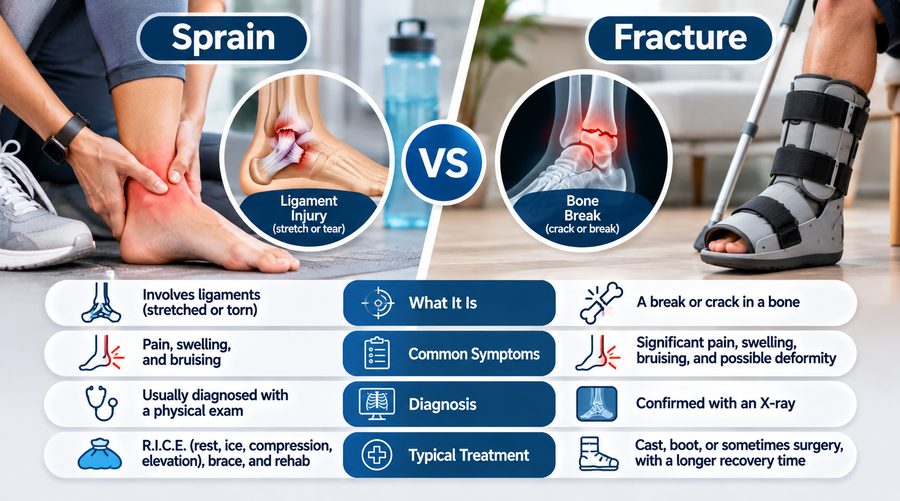
A sprain is an injury to a ligament, the strong band of tissue that connects bones and supports a joint. A fracture is a crack or break in a bone. Both can cause pain, bruising, swelling, and difficulty moving or using the affected area. At Hillsboro Urgent Care, our clinicians can assess an injury, consider whether imaging is needed, and help determine whether urgent care or emergency treatment is the right next step.
What Is the Difference Between a Sprain and a Fracture?
Sprains affect ligaments
Ligaments stabilize joints by limiting excessive movement. A sprain occurs when a ligament stretches too far or tears, often after a joint twists, rolls, or bends awkwardly. An ankle sprain, for example, may happen when the foot rolls inward during a run or when someone lands on an uneven surface. Sprains range from mild stretching to more substantial tears. Pain severity alone does not reliably distinguish a mild injury from a more serious one.
Sprains are common during sports and everyday activities. They can occur when changing direction quickly, slipping on stairs, lifting something while the body is turned, or stepping off a curb. Some people feel a sudden pull or pop, while others notice increasing discomfort over the next several hours.
Fractures affect bones
A fracture is a break or crack in a bone. It may result from a fall, direct impact, twisting force, or repeated stress. Some fractures are obvious, with visible deformity or an open wound. Others are small or nondisplaced, meaning the bone has not moved significantly out of position. These less obvious fractures can still require appropriate treatment.
Fractures can occur near a joint and may be mistaken for a sprain. A person may also have a sprain and a fracture at the same time. Clinicians consider how the injury occurred, the location of tenderness, function, and examination findings when deciding whether imaging is appropriate.
Common Symptoms of Sprains and Fractures
Symptoms that may occur with a sprain
Ankle sprain symptoms commonly include pain around the ankle, swelling, bruising, tenderness, and stiffness. The joint may feel unstable or sore when you stand or walk. Depending on the injury, discomfort can be concentrated on one side of the ankle or spread into the foot. Similar symptoms can occur in sprains of the wrist, knee, or other joints.
Some people can still move the joint or put weight on it after a sprain. However, being able to walk or move an injured area does not prove that the injury is minor or that a fracture is absent. Swelling and bruising may also become more noticeable after the initial injury, so changes over time should be taken seriously.
Signs of a broken bone
Possible signs of a broken bone include sharp or persistent pain, swelling, bruising, marked tenderness over a bone, difficulty using the injured limb, or an unusual shape. A grinding or crackling sensation with movement can occur, but you should not move the area to check for it. Some fractures cause only moderate pain, and some do not produce an obvious deformity. The absence of a dramatic symptom does not rule out a fracture.
In children, older adults, and people with certain health conditions, injuries may need prompt assessment even when symptoms seem less severe. Children’s bones are still developing, and older adults may be more vulnerable to fractures after a fall. If pain is significant, getting worse, or limiting normal function, arrange a medical evaluation.
Why You Cannot Reliably Diagnose the Injury at Home
Sprains and fractures share many symptoms. Swelling, bruising, tenderness, and limited movement can occur with either injury, and pain levels vary widely from person to person. A person might be able to bear weight with a fracture, while a severe sprain can make walking very difficult. Symptoms alone cannot reliably distinguish a sprain from a fracture without a clinical assessment.
A clinical assessment can help identify the likely injury and determine whether an X-ray or other next step is needed. The goal is not only to relieve pain, but also to avoid missing an injury that may need immobilization, follow-up, or treatment by a specialist. If symptoms are severe or the injury looks unusual, seek care rather than waiting to see whether it improves on its own.
How Clinicians Evaluate a Possible Fracture
Questions and physical assessment
During an injury evaluation, a clinician may ask how the injury happened, when symptoms began, where pain is strongest, and whether you can use or bear weight on the affected area. Be ready to mention prior injuries, relevant medical conditions, medications, and any changes you have noticed since the event.
The clinician may inspect the area for swelling, bruising, wounds, or changes in shape. They may gently assess tenderness, movement, and function, while also checking circulation and sensation. Do not force movement or attempt to straighten a visibly deformed limb before it has been assessed. The examination findings help determine whether imaging or additional follow-up is appropriate.
When X-rays may be needed
X-rays are commonly used to look for fractures and can help show a bone’s position and the extent of a break. They may be recommended when the injury mechanism, pain location, examination findings, or difficulty using the limb raises concern for a fracture. Not every sprain requires an X-ray, and the decision depends on the individual situation.
An X-ray is useful, but some injuries can be difficult to see at first or may require additional assessment. If symptoms persist or worsen despite an initial evaluation, follow the clinician’s advice about rechecking the injury. For a non-life-threatening injury, fracture evaluation at urgent care may help determine whether imaging, treatment, or referral is appropriate.
What to Do Immediately After an Injury
While arranging an evaluation, take steps that reduce additional strain without trying to diagnose the injury yourself:
- Stop the activity. Continuing to play, run, or lift can worsen an injury.
- Protect the area. Keep it as still and comfortable as possible. Avoid forcing a joint through its range of motion.
- Apply a wrapped cold pack. Use a cloth between the cold source and skin, and take breaks rather than applying ice directly or continuously.
- Elevate the injured area if comfortable. Raising it may help manage swelling, but do not reposition it if that increases pain or appears unsafe.
- Remove tight jewelry when appropriate. Rings or bracelets may become difficult to remove if swelling increases. Do not pull on anything that is stuck or causes pain.
- Arrange medical assessment. Seek care when pain, swelling, tenderness, or reduced function raises concern, even if you can still move the area.
Avoid trying to push a bone back into place, tightly wrapping an area with numbness or tingling, or using pain relief as a reason to resume activity. If an injury is severe, seek medical care.
When Urgent Care May Be Appropriate
Urgent care may be appropriate for injuries that need prompt evaluation but do not have emergency warning signs. Consider contacting a clinic or seeking walk-in care if you have ongoing pain, swelling, bruising, focal tenderness, or difficulty using a limb after a fall or twist. An evaluation can help clarify whether the problem may be a sprain, fracture, or another injury and whether X-rays or further care are needed.
Hillsboro Urgent Care offers walk-in medical care for a range of non-emergency health concerns. If you are unsure where to go, call ahead when possible and describe the injury and symptoms. Our team can help you understand the appropriate care option based on the services available and the urgency of the situation.
When to Seek Emergency Medical Care
Some injuries require immediate emergency evaluation rather than a routine urgent care visit. Call emergency services or go to an emergency department for symptoms such as:
- An open wound with bone visible or a severe wound over the injured area.
- A limb or joint that appears significantly deformed.
- Severe bleeding, rapidly worsening pain, or an injury involving a major fall or high-impact collision.
- Numbness, new weakness, or a hand or foot that becomes pale, blue, unusually cold, or difficult to move.
- A suspected head, neck, back, chest, or pelvic injury, especially after a serious accident.
- Signs of shock, such as fainting, confusion, unusual clamminess, or trouble breathing.
Do not drive yourself if the injury is severe, you feel faint, or you cannot safely control the vehicle. Keep the injured person as still as possible while help is arranged, and follow emergency dispatch instructions.
Sports Injuries and Returning to Activity
Sports injuries often happen during fast movement, contact, jumping, or quick changes in direction. A rolled ankle on the field or a fall during practice can cause symptoms that resemble a sprain, even when a bone is involved. After a sports injury in Deerfield Beach, stop the activity, protect the injured area, and seek evaluation when pain, swelling, or loss of function is concerning. Do not return to play simply because you can tolerate the discomfort.
Returning too soon can aggravate an injury and delay recovery. Follow the treating clinician’s guidance on activity, supportive devices, follow-up, and rehabilitation. A gradual return is generally safer than returning immediately into intense training. If pain, swelling, or instability returns as activity increases, stop and ask for further medical advice.
Getting the Right Evaluation Matters
When comparing a sprain vs. fracture, remember that no single symptom can settle the question. A sprain affects a ligament; a fracture affects a bone, but both can cause pain, swelling, bruising, and reduced movement. Visible deformity, an open wound, numbness, or severe pain calls for urgent attention, while persistent pain or difficulty using the area deserves prompt evaluation even when the injury seems less dramatic.
Our team at Hillsboro Urgent Care can assess many non-emergency injuries and help determine whether imaging or additional care may be appropriate. If an injury is severe, involves a dangerous mechanism, or includes emergency warning signs, seek emergency medical care. If you are uncertain whether the injury is a sprain or fracture, seek medical evaluation rather than trying to rule out a broken bone at home.
Not sure whether an injury is a sprain or fracture? Contact Hillsboro Urgent Care for evaluation of many non-emergency injuries. A clinician can assess the symptoms and determine whether imaging, treatment, follow-up, or referral may be appropriate.